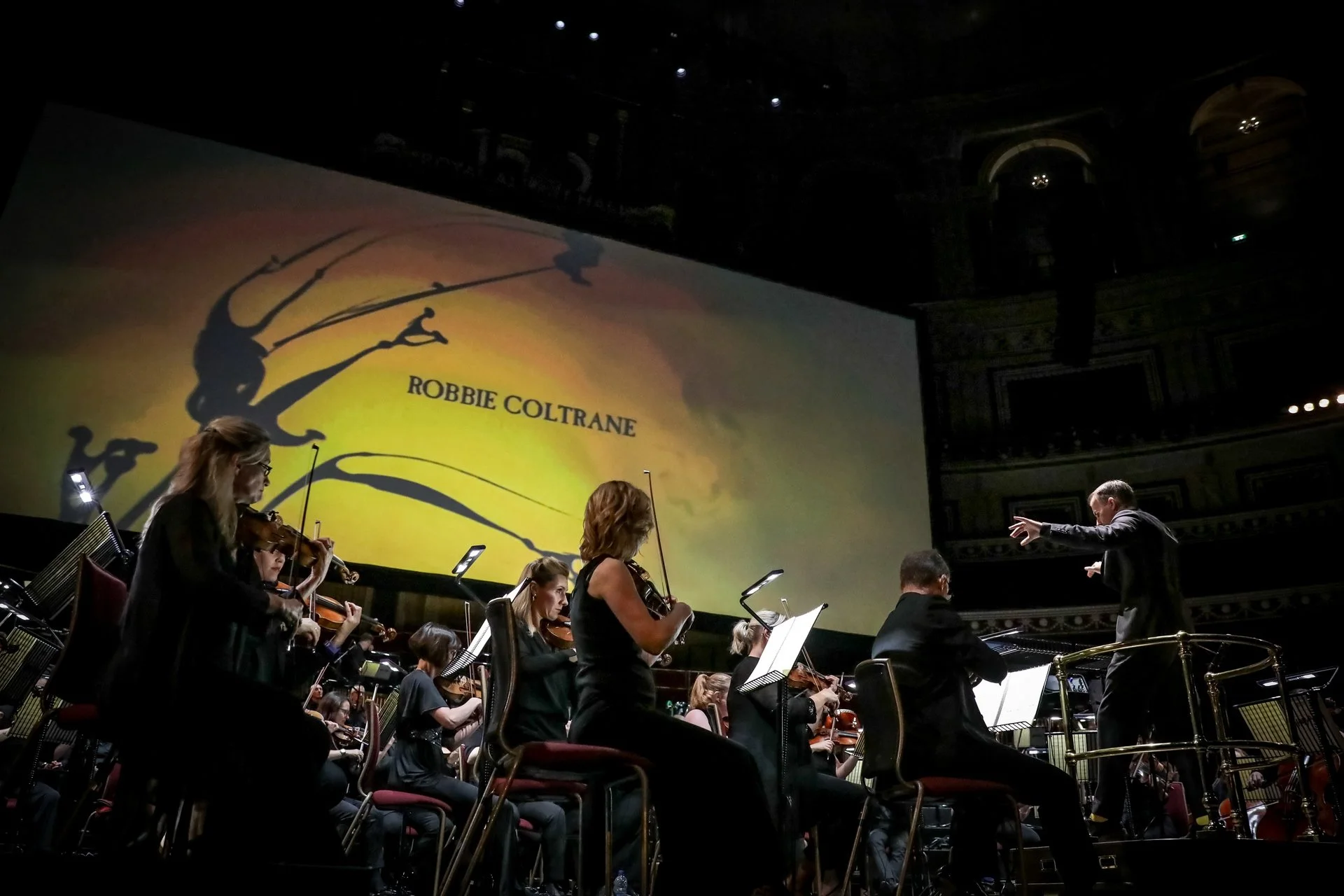
You've seen the format even if you haven't been to one: a huge screen above the stage, a full symphony orchestra below it, and a movie you know by heart playing while the score is performed live in front of you. Star Wars, Harry Potter, Jurassic Park, The Godfather, Gladiator, Home Alone, La La Land — over the past decade the film-with-live-orchestra concert has gone from novelty to a staple of the concert season for major orchestras worldwide.
From the audience, it looks like the orchestra is simply "playing along" with the movie. In practice, getting an eighty-plus-piece ensemble locked to picture for two hours without a single missed cue is a small production of its own — with its own companies, its own specialist crews, and a preparation cycle that starts long before the first rehearsal. This article walks through how one of these shows actually gets made.
The companies behind the shows
There isn't a single company doing all of this. The industry has coalesced around a small group of specialist producers, each with a distinct portfolio of titles.
CineConcerts
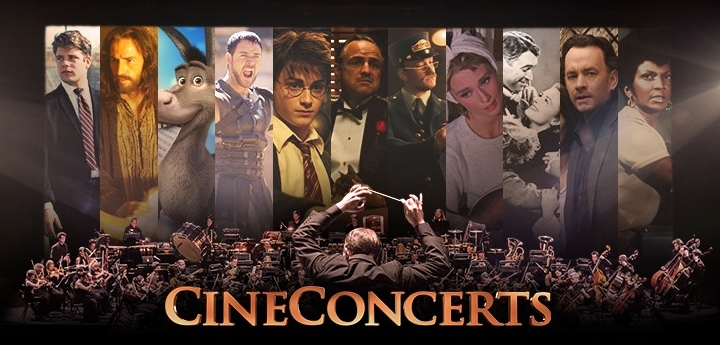
CineConcerts was founded in 2013 by producer/conductor Justin Freer and producer/writer Brady Beaubien, and it's the outfit behind many of the best-known non-Disney franchises on the live-to-picture circuit. Its catalogue includes the Harry Potter Film Concert Series — created in partnership with Warner Bros. Discovery Global Experiences, and the only official global Harry Potter concert tour — as well as Gladiator Live, The Godfather in Concert, It's a Wonderful Life in Concert, The Polar Express in Concert, DreamWorks Animation in Concert and Rudy in Concert, among others. The Harry Potter series alone has scheduled more than 3,000 performances across upwards of 48 countries.
Disney Concerts
Disney Concerts is the concert-production and licensing division of Disney Music Group, itself the music arm of The Walt Disney Company. It licenses concert packages built around the studio families now under the Disney umbrella — Walt Disney Pictures, Walt Disney Animation Studios, Pixar, Marvel Studios, Lucasfilm and 20th Century Studios. That means the Star Wars Film Concert Series, the Pixar concerts, the Marvel titles, Frozen, Beauty and the Beast, the Pirates of the Caribbean films and dozens more all sit inside Disney Concerts' catalogue. When you see a Star Wars film live to picture, the licence at the bottom of the programme almost always reads "Presentation licensed by Disney Concerts in association with Lucasfilm and Warner/Chappell Music."
Film Concerts Live!
Film Concerts Live! is a joint venture between IMG Artists (one of the major artist-management and touring agencies) and The Gorfaine/Schwartz Agency (the long-established Hollywood talent agency for composers and music editors). Since 2013 it has handled licensing, booking and marketing support for a large slate of film-with-live-orchestra titles from various studios, effectively acting as the middle layer between the film rights, the orchestras and the venues.
Getting the rights
Before any of this reaches an orchestra, the producer has to clear the rights — and there are more of them than most people expect. A film concert typically involves at least three separate rightsholders:
- The studio, for the film itself: the picture, the ability to publicly project it, and the audio stems needed to strip the recorded score out of the mix.
- The music publisher, for the underlying compositions. This is why licence lines for Star Wars concerts credit Warner/Chappell Music alongside Lucasfilm — Warner/Chappell publishes John Williams's Star Wars scores.
- The composer's representatives, in cases where synchronization or performance approvals are handled separately.
Once these are in place, a producer like CineConcerts or Disney Concerts assembles the "package" that goes out to orchestras: video, click, streamers/punches, printed parts, conductor's score and a licence agreement. Orchestras then buy or licence that package for a run of performances.
Rebuilding the score
Here's the part that surprises people: for many older films, a complete, cleanly notated orchestral score of the film music simply doesn't exist in a form you can hand to a modern orchestra. What survives in the studio vaults is often a mixture of hand-copied parts, cue sketches, recording session notes and mix stems — pieces of a jigsaw that a music editor and an orchestrator have to reassemble into performable material.
That reconstruction phase can involve retyping and re-orchestrating from surviving sketches, matching each cue back to the final film mix down to the frame, and cross-checking against the original soundtrack recordings. For a franchise like Harry Potter or Star Wars — where the composer, publisher and studio archives are all reachable — this is a large but tractable job. For older or more fragmented catalogues, it can take a substantial part of the total preparation time.
The film changed. The soundtrack format changed. The one thing that has to be exactly the same as the recording, on the night, is the music.
What the music editor actually does
The person most responsible for the show working on the night is the music editor. It's a distinct role, and it's the one that ties directly into the tradition of streamers and punches.
On a live-to-picture project, the music editor's job typically includes:
- Spotting — sitting with the film and marking the exact frame of every hit, tempo change and cue start.
- Preparing the click track — a tempo map that follows the film cue by cue, including bar-by-bar tempo changes, ritardandos and meter shifts written into the original recording.
- Placing streamers and punches — the visual sync language a conductor reads off the monitor: a line sweeping across the screen toward a hit, and a flash on the downbeat. Streamers are traditionally timed at around two seconds; punches mark the sync point at the far edge.
- Adding flutters and counters where useful — flutters for passing bar lines, counters for cue count-ins.
- Delivering the marked video — the reference video the conductor and (in some setups) the back-of-orchestra players actually see, with all of the above burned in or overlaid live.
The whole point of this work is that a conductor can lead an orchestra through a two-hour film without ever losing the sync. In the words of a working live-to-picture music editor summarizing the setup for a discussion of the craft: the conductor gets click, punches, flutters and streamers; the percussion may get click; the back of the orchestra may get the visuals; and everything is also marked into the score itself with a sync line. That layered redundancy is what keeps 80+ musicians locked to picture on the night.
The stems mix: making room for the orchestra
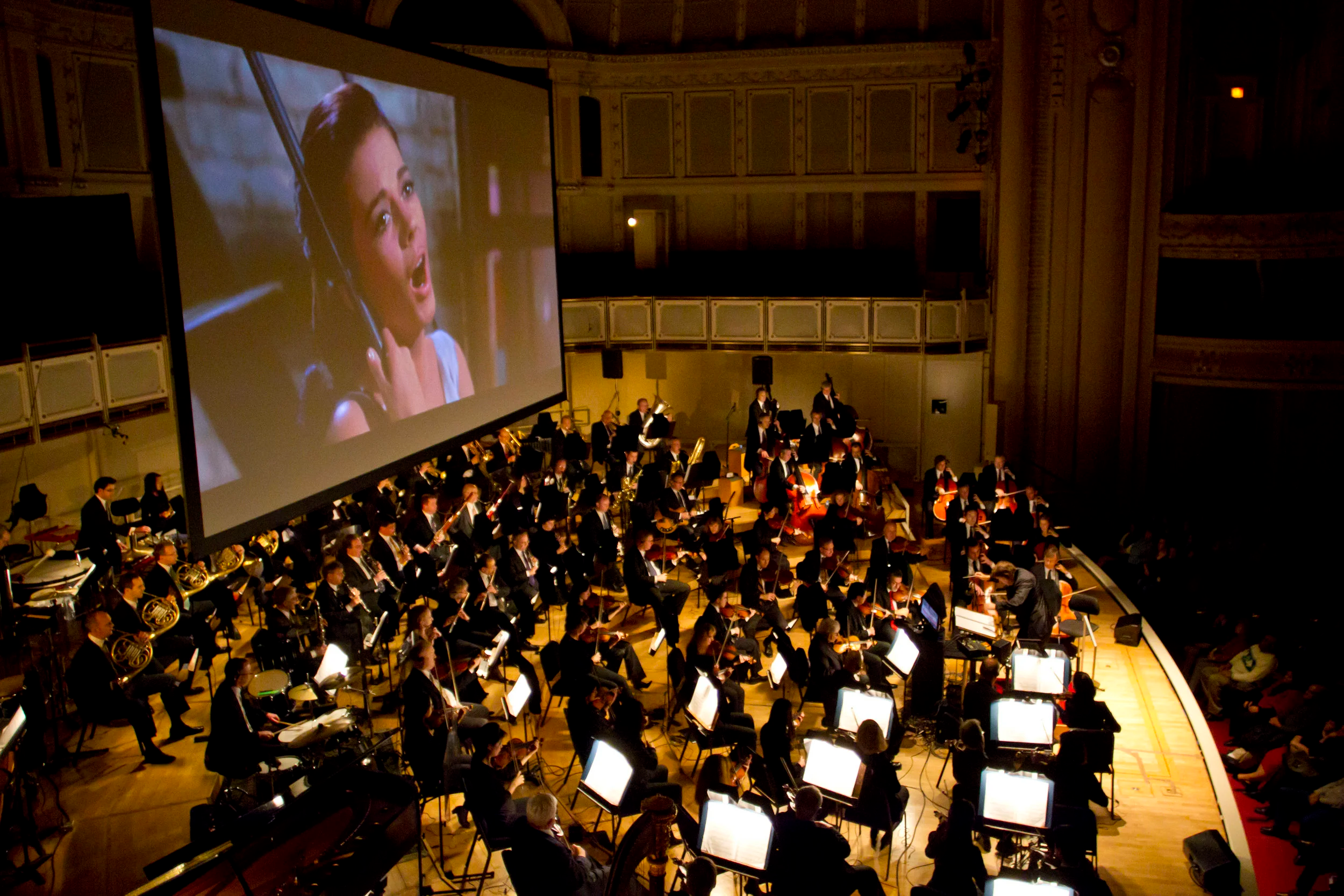
Every film-in-concert setup has the same underlying problem: the movie already has a music track on it, and the whole point is that a live orchestra should be playing that music instead. So the recorded score has to come out of the mix — cleanly, without losing dialogue, sound effects or Foley.
The ideal case is a modern film delivered with its D-M-E stems intact (dialogue, music, effects). Muting the music stem gives you the version of the film the orchestra needs: dialogue and effects, no score. Then the orchestra literally replaces the missing layer, in real time, on the night.
That's not always possible. Conductor David Newman — who leads many of these concerts, including Star Wars titles at the Hollywood Bowl — has described the harder cases in interviews on the format: for a 1960 film like West Side Story, the singing was married to the orchestra on the music stem, so you can't just mute it without losing Marni Nixon's and Rita Moreno's vocals. Older monaural mixes like The Wizard of Oz or Casablanca don't have separate stems at all.
The workarounds:
- Dip-and-dive — a mixer manually ducks the film's audio during scored moments so the live orchestra sits on top, and returns the film mix to full during dialogue-only scenes.
- Spectral repair and modern source-separation tools — used to lift a music stem out of a mix that was never intended to be separated.
- Rebuilding the M&E — reconstructing a new dialogue-and-effects mix from surviving elements in the archive.
Rehearsals and performance
Once the package is delivered, the orchestra's own preparation is surprisingly short. Musicians who play these shows regularly report that rehearsal counts are similar to a "normal" concert program — typically two or three sessions plus a general rehearsal on the day of the show. Early rehearsals often happen without any picture in the room: the orchestra learns the music as music first, and only later does the screen come into play.
The general rehearsal, on the day, is usually the first time the orchestra, the film and the sync system are all together. Much of that time goes to the technical crew — verifying that the click reaches the conductor's ears (or eyes), that the streamers and punches are in sync, that the projection matches the click, and that the venue's audio distribution to the orchestra has the right latency compensation. For touring shows this is done in every new venue.
On the podium, the conductor's setup varies. Some conductors work off a click in in-ear headphones. Others prefer a visual click — a small screen showing streamers and punches — because it leaves the ears free for the orchestra. Many use both.
How long does the whole thing take?
The honest answer is: it varies wildly, but the preparation dwarfs the performance. A typical live-to-picture package for a well-known modern film usually goes through something like the following stages:
- Months 0–3Rights, licensing and studio archive audit. Producer, studio, publisher and estate representatives agree terms; archive teams identify what audio and score materials survive.
- Months 2–8Score reconstruction and orchestration. Missing parts are re-copied or re-orchestrated from sketches and session recordings; a new conductor's score is prepared.
- Months 4–9Music editorial. Click track, streamers, punches, flutters and counters are placed against the frame-accurate reference cut; sync markings are added into the printed score.
- Months 6–10Video and audio preparation. Music stem removed or reduced; dialogue and effects delivered as a stable, clocked video file for touring.
- Weeks –4 to –1Orchestra prep. Parts arrive at the presenting orchestra; players begin individual and section preparation.
- Concert weekTwo or three rehearsals plus a general rehearsal on the day; then a single 2–3 hour performance with intermission.
For a brand-new title being brought to the live-to-picture format for the first time, expect the full cycle from rights to first performance to run anywhere from roughly nine months to two years. Once a title exists as a touring package, individual orchestras can book it and put it on with just a few weeks of local preparation.
Who conducts these things
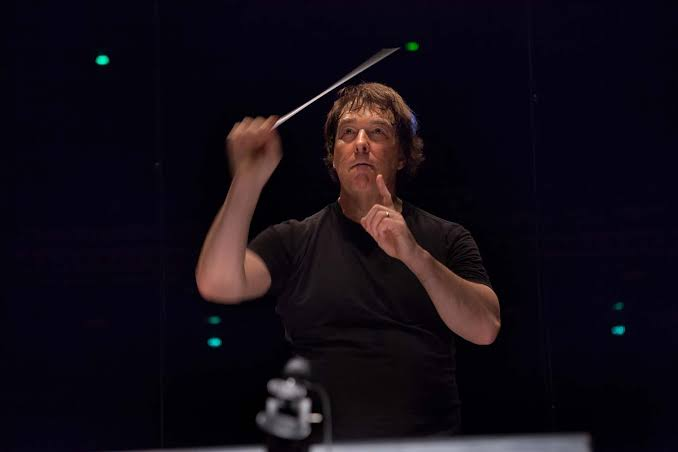
A small but growing group of conductors specializes in live-to-picture. Justin Freer conducts many of CineConcerts's titles himself, including a lot of the Harry Potter series performances. David Newman — son of Alfred Newman, the composer who devised the streamer-and-punch system at 20th Century Fox in the 1940s — has led many of the Star Wars concerts at the Hollywood Bowl and elsewhere. Constantine Kitsopoulos, Sarah Hicks and a handful of others regularly appear on the podium for these shows around the world. It's a specialist skill: conductors who do this well develop a specific reading of the streamer-and-punch visual language that lets them shape the music expressively while guaranteeing the hit.
Where the tooling fits in
All of the above rests on one shared piece of infrastructure: a reliable way to place streamers and punches on a timeline, generate a synced click track, and get the whole thing in front of a conductor in a way that's rock-solid on the night. For decades that meant custom software running on dedicated machines and, before that, physical marks scribed onto film.
The visual language a conductor reads on a live-to-picture concert stage in 2026 is exactly the same one Alfred Newman devised for scribed film on the Fox lot in the 1940s. The chain from producer to studio to music editor to conductor to orchestra has grown enormously in complexity — but at the end of it, the conductor is still looking at a sweep and a flash, and using them to keep a live ensemble locked to a projected film. That's the job CueSync exists to serve: streamers, punches, counters and a synced clicktrack on a modern Mac, ready for the scoring stage or the concert stage.